When the Engine Slows: A Simple Way to Understand Parkinson’s Disease
Living with Parkinson Disease (PD) can be frustrating and confusing. One day your body corporates, the next day following months and years everything starts feeling slower, heavier or harder to control. Movements that used to feel automatic now take conscious effort.
But here are the part people don’t hear often enough:
Parkinson’s progression can be slowed, and exercise is one of the most powerful tools we have.
Understanding Parkinsons
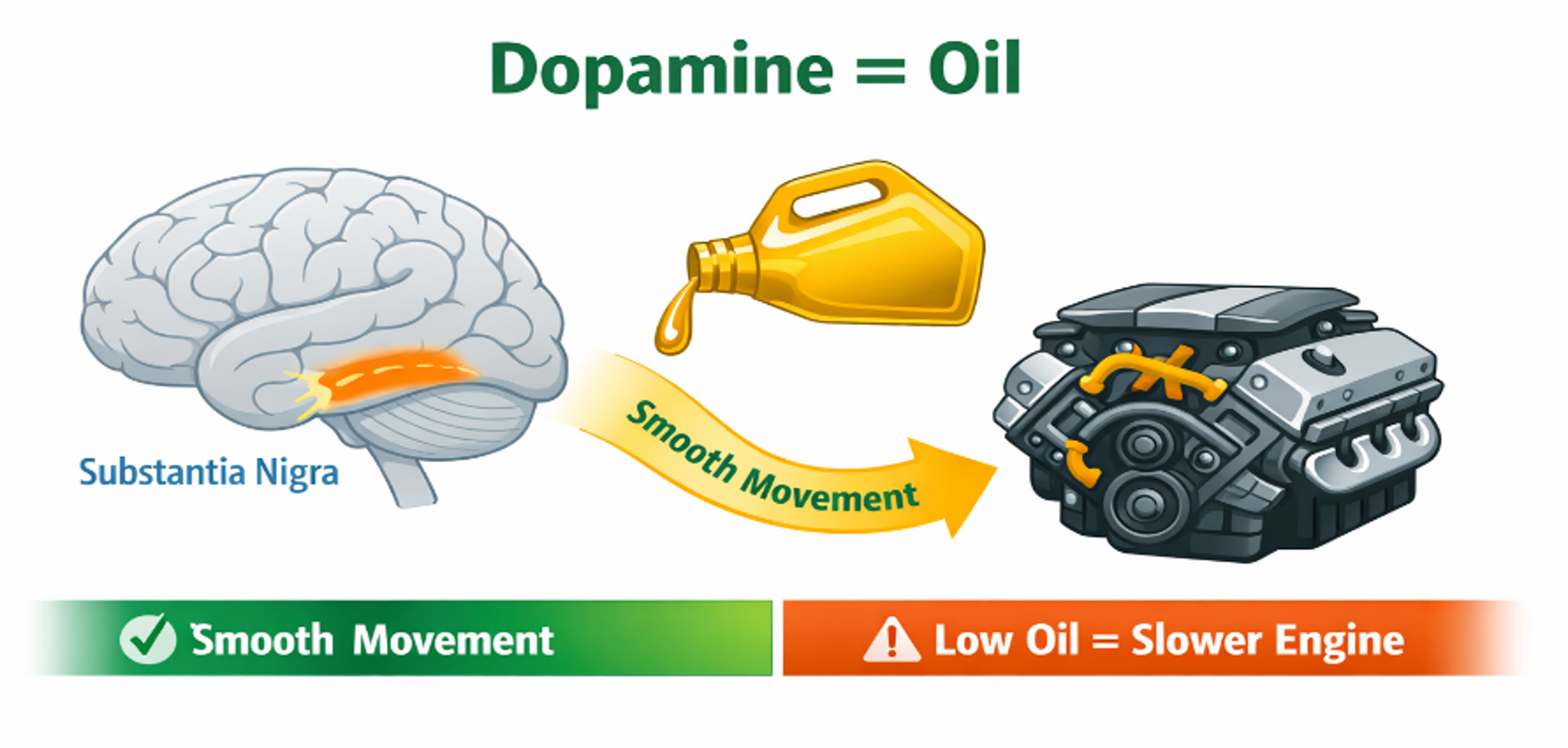
Parkinson’s Disease is a neurological condition that affects the way the brain controls movement. The main issue is a drop in dopamine, the chemical that helps your movements stay smooth and coordinated.
This happens because the dopamine producing neuron in the substantia nigra gradually declines.
The simplest way to picture it?
Your body is a car, and dopamine is the oil.
The car still runs with low oil, but everything feels rougher, slower and less responsive.
Different Types of Parkinson's
Continuing the car analogy:
- Bradykinesia Dominant (Weak Engine): The car still drives but it takes longer to start and does not respond as quickly. Movements feel slow, small and effortful.
- Tremor Dominant (Car shakes while idling): When the car is stopped but still switched on, the engine vibrates. That’s the resting tremor. Once you start moving, the shaking often settles.
- Agility Impaired (Work suspension and stiff steering): The car can still move, but turning feels unsteady, bumps feel bigger and balance is unpredictable. This reflects gait and postural instability.
Understanding your “type” helps explain your symptoms, and guide how we train our bodies.
Why Exercise Slows Parkinson’s Progression:
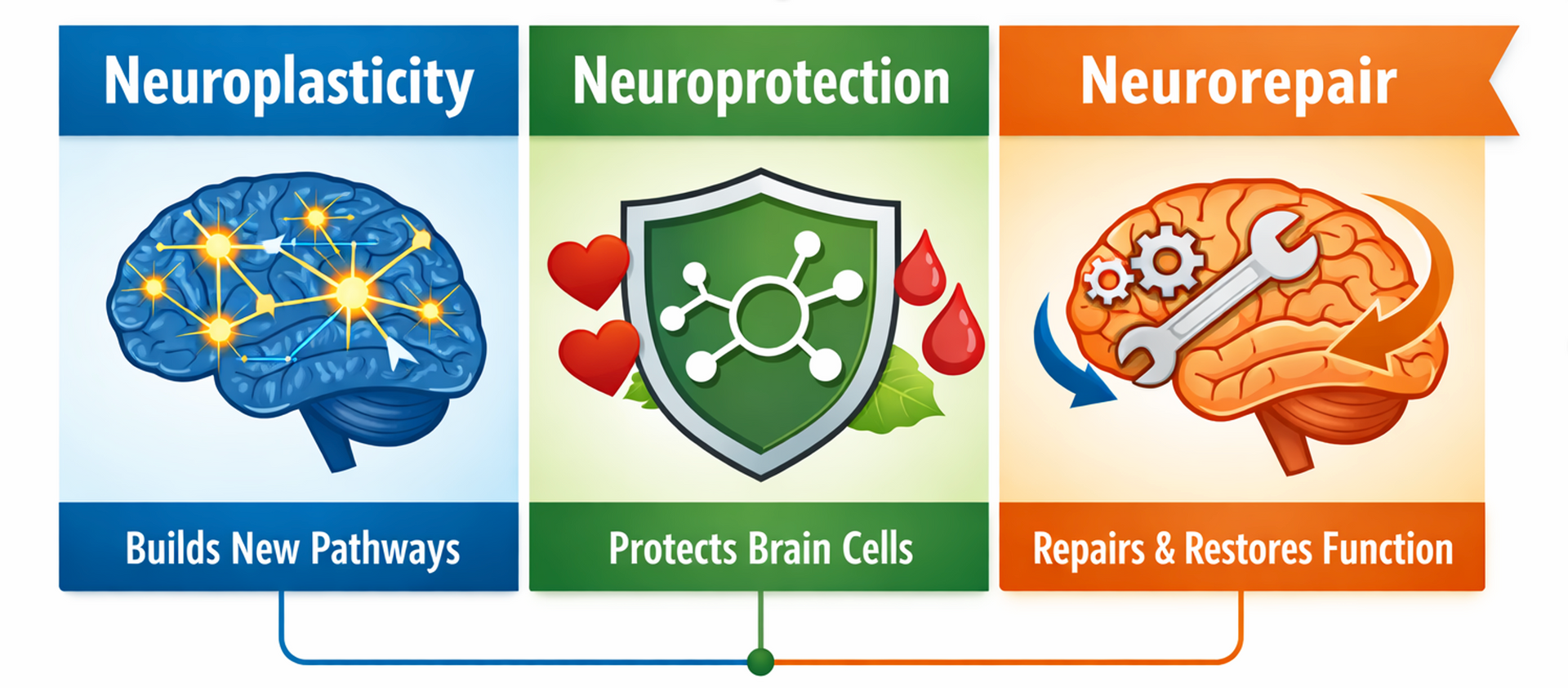
Exercise slows Parkinson’s progression because it directly supports the brain. It boosts neuroplasticity, helping the brain create new movement pathways when old ones become less efficient, similar to building new roads when the original route is damaged. It provides neuroprotection, increasing blood flow and growth factors that keep dopamine producing neurons healthier for longer. And it promotes neurorepair, improving circulation and cellular recovery so the brain can maintain function despite ongoing change. In simple terms, exercise doesn’t just help you move better today, it helps your brain stay stronger and more adaptive over time.
Why this Matters
Understanding why exercise works changes the way you approach movement. When you realise that exercise isn’t just “good for you” but is helping your brain stay healthier, more adaptable, and more resilient, it becomes more than a routine it becomes treatment. Every walk, every stretch, every strength session is an investment in keeping your independence, confidence, and quality of life for as long as possible.